A realistic indoor photograph of a tall, very pale-skinned man with long, dark, slightly messy hair. The shot is taken from an over-the-shoulder perspective. The man is facing away from the camera, looking into a mirror, and holding a smartphone up to take a picture. His back is bare, revealing a long, muscular torso. He is wearing dark, high-waisted trousers. The camera focuses sharply on his back in the mirror's reflection, while the foreground (his shoulder and hair on the right side of the frame) is heavily out of focus. The background shows a dimly lit room with light walls, a dark wooden doorway, and a light beige sofa. Warm, moody artificial lighting, slight film grain, vertical composition. (Если Gemini все равно будет капризничать из-за "bare back", замените "His back is bare, revealing a long, muscular torso" на "He is wearing a dark, tight-fitting tank top" — так вы обойдете фильтры, а потом сможете убрать одежду в фотошопе или через инпейнт).
A single lioness, side profile, full body, standing alert with ears forward, head turned slightly toward the viewer, highly detailed wildlife photography, National Geographic photo, accurate anatomy, realistic fur texture, shot on a DSLR camera, 8k resolution, isolated on pure white background, soft studio lighting, ultra-detailed, centered composition Negative Prompt (Add these words to force away the cartoon look): cartoon, anime, 3d render, illustration, painting, drawing, flat colors, stylized, text, words, letters, watermarks, logos, borders, clutter, background noise, duplicate subjects, cropped elements, distorted anatomy, extra limbs, extra fingers, deformed faces, blurry edges, low-res artifacts
A single lioness, side profile, full body, standing alert with ears forward, head turned slightly toward the viewer, photorealistic wildlife illustration style, natural-history field-guide detail, accurate anatomy, fine fur texture, single-subject nature-photography composition, National Geographic-level realism, isolated on pure white background, soft studio lighting, ultra-detailed, centered composition
Pope doing a backflip with sunglasses on
Pope doing a backflip with sunglasses on
Pope doing a backflip with sunglasses on
Pope doing a backflip with sunglasses on
little girls pose in beach
baclground change with my own pics
Marine Kitagawa bathing suit answering the door.
создай полу голую Drov ranger котрая сидит на стуле без трусов закуинув ногу на ногу и смотрит высокомерно
Pope dancing with sunglasses
bnx climax vs bnx combax
Trans girl with a handsome dick, her fuchsia pedicure and mini tank top
ai charactercure
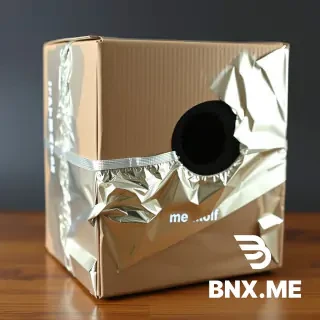
Masks me a card board box with tin foil wrapped around it and black strong foam and 6in by 6in by 6in
1990
Women sitting sofa wearing leather and long boots
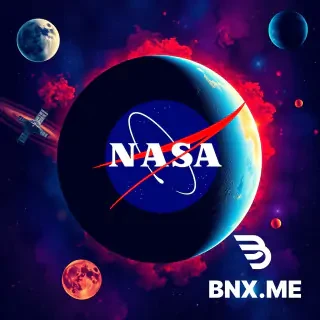
create a colrful image to these info (NASA stands for National Aeronautics and Space Administration. NASA is an American space agency. It was founded in 1958. NASA is in Washington, D.C. NASA studies space, Earth, and the solar system. It supports the International Space Station. Scientists and astronauts work at NASA to discover new things. They hope to find life on other planets one day. NASA needs many different workers, not only astronauts. Workers include engineers, mathematicians, accountants, writers, IT specialists, and project managers. People who want to work at NASA need knowledge and skills. They should study hard, work hard, and follow their goals.
Two jeans
Monochrome pixel art logo MESHOK
Pixel art logo of "me shok hub", a stylized burlap sack with two glowing lightning-bolt eyes, two small antenna sticks sticking out from the top, surrounded by electric sparks and zigzag arcs, on a pure black background, retro 8-bit game aesthetic, neon cyan and yellow colors, sharp pixel edges, square frame 1:1, bold pixelated text "me shok hub" placed neatly below the sack, high contrast, no gradients, clean blocky pixels, nostalgic arcade style --ar 1:1
Пиксель-арт логотип «me shok hub»: стилизованный мешок с завязкой, глаза в виде молний (светятся жёлтым), две антенны-палочки на макушке, вокруг летят искры и разряды, фон чёрный, ретро 8-бит, цвета неоново-голубой и жёлтый, квадратный кадр, внизу крупный пиксельный текст «me shok hub», чёткие пиксели, без сглаживания, стиль старых аркад.
Пиксель-арт логотип «me shok hub»: стилизованный мешок с завязкой, глаза в виде молний (светятся жёлтым), две антенны-палочки на макушке, вокруг летят искры и разряды, фон чёрный, ретро 8-бит, цвета неоново-голубой и жёлтый, квадратный кадр, внизу крупный пиксельный текст «me shok hub», чёткие пиксели, без сглаживания, стиль старых аркад.
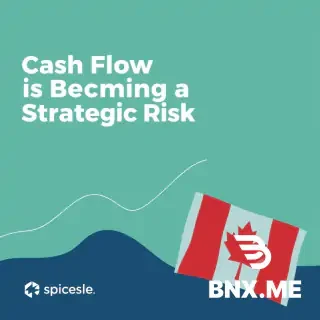
🚨 Cash Flow Is Becoming a Strategic Risk: Why Businesses Should Watch Receivables More Closely The economic environment is changing quickly. In Canada, the Bank of Canada has maintained its policy rate at 2.25%, while highlighting continued uncertainty from energy prices, geopolitical developments and new U.S. tariffs and Canadian countermeasures. (Bank of Canada) At the same time, Canadian insolvency activity remains elevated. In June 2026, total insolvencies were 11.5% higher than June 2025, while business insolvencies increased 5.5% year-over-year for the month. (ISED Canada) For businesses managing B2B receivables, these conditions create several measurable cash-flow risks: 🔹 Insolvency risk remains elevated; Canada recorded 13,254 insolvency filings in June 2026, an 11.5% increase year-over-year. While business insolvencies were lower year-over-year in Q1, they increased 9.8% quarter-over-quarter, showing that financial pressure remains uneven across the economy. (Business Examiner) 📊 Trade exposure is becoming a credit-risk factor; Canada’s economy continues to adjust to U.S. tariffs and a changing global trade environment. The federal government estimates that U.S. tariffs contributed to lower Canadian goods exports, weaker business investment and job losses in tariff-exposed industries. (Budget Canada) ⚠️ Inflation can quickly become a margin problem; the Bank of Canada has warned that higher energy prices are pushing inflation upward, while maintaining its 2% inflation target. For businesses operating on narrow margins, higher transportation, energy and input costs can reduce the cash available to service trade obligations. (Reuters) 💰 Interest rates still matter even after rate cuts; the Bank of Canada’s policy rate currently sits at 2.25%. Lower rates can provide relief, but businesses carrying significant debt remain exposed to refinancing costs, variable-rate borrowing and tighter lending conditions. (Reuters) 📈 Sector-specific risk is becoming increasingly important; in Q1 2026, Canadian business insolvencies increased year-over-year in sectors including construction (+15 filings), management of companies (+17), other services (+11), and finance & insurance (+10). Credit decisions should therefore consider industry conditions—not simply a customer’s historical payment record. (CAIRP) 🌎 Supply-chain and tariff uncertainty can affect customers before they become delinquent; changes in sourcing costs, export markets, inventory requirements and delivery conditions can weaken a company’s working-capital position well before an invoice becomes overdue. 📋 Working capital deserves closer attention; when payment cycles lengthen, suppliers effectively carry more of the customer’s financing burden. Even without a formal default, a growing receivables balance can reduce liquidity available for payroll, inventory, taxes and operating expenses. 💬 Payment behaviour can become an economic indicator; increasing DSO, repeated requests for extensions, partial payments and declining order volumes may provide earlier warning of financial stress than a traditional delinquency report. 💡 The important question for businesses in 2026 is not simply “Are our customers paying?” — it is “How resilient is their ability to keep paying if costs, financing conditions or trade pressures deteriorate?” In an economy where insolvency levels, trade uncertainty, energy costs and financing conditions continue to influence business performance, credit management is increasingly becoming a cash-flow and risk-management function—not simply a collections function Stay positive more imagery than text
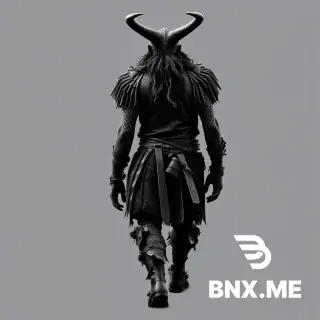
can you get rid of the grey background on this image https://www.google.com/imgres?q=movie%20grendel%20walking%20away%20from%20the%20screen&imgurl=https%3A%2F%2Fwww.writeups.org%2Fwp-content%2Fuploads%2FGrendel-2007-Beowulf-movie-Crispin-Glover-c.jpg&imgrefurl=https%3A%2F%2Fwww.writeups.org%2Fgrendel-beowulf-movie-crispin-glover%2F&docid=mKn5iicTay4sHM&tbnid=J32ghvrdR1A7dM&vet=12ahUKEwiWxf22j9-WAxV6LdAFHQ9oI9IQnPAOegUIlAEQAA..i&w=500&h=1079&hcb=2&ved=2ahUKEwiWxf22j9-WAxV6LdAFHQ9oI9IQnPAOegUIlAEQAA
🚨 Cash Flow Is Becoming a Strategic Risk: Why Businesses Should Watch Receivables More Closely The economic environment is changing quickly. In Canada, the Bank of Canada has maintained its policy rate at 2.25%, while highlighting continued uncertainty from energy prices, geopolitical developments and new U.S. tariffs and Canadian countermeasures. (Bank of Canada) At the same time, Canadian insolvency activity remains elevated. In June 2026, total insolvencies were 11.5% higher than June 2025, while business insolvencies increased 5.5% year-over-year for the month. (ISED Canada) For businesses managing B2B receivables, these conditions create several measurable cash-flow risks: 🔹 Insolvency risk remains elevated; Canada recorded 13,254 insolvency filings in June 2026, an 11.5% increase year-over-year. While business insolvencies were lower year-over-year in Q1, they increased 9.8% quarter-over-quarter, showing that financial pressure remains uneven across the economy. (Business Examiner) 📊 Trade exposure is becoming a credit-risk factor; Canada’s economy continues to adjust to U.S. tariffs and a changing global trade environment. The federal government estimates that U.S. tariffs contributed to lower Canadian goods exports, weaker business investment and job losses in tariff-exposed industries. (Budget Canada) ⚠️ Inflation can quickly become a margin problem; the Bank of Canada has warned that higher energy prices are pushing inflation upward, while maintaining its 2% inflation target. For businesses operating on narrow margins, higher transportation, energy and input costs can reduce the cash available to service trade obligations. (Reuters) 💰 Interest rates still matter even after rate cuts; the Bank of Canada’s policy rate currently sits at 2.25%. Lower rates can provide relief, but businesses carrying significant debt remain exposed to refinancing costs, variable-rate borrowing and tighter lending conditions. (Reuters) 📈 Sector-specific risk is becoming increasingly important; in Q1 2026, Canadian business insolvencies increased year-over-year in sectors including construction (+15 filings), management of companies (+17), other services (+11), and finance & insurance (+10). Credit decisions should therefore consider industry conditions—not simply a customer’s historical payment record. (CAIRP) 🌎 Supply-chain and tariff uncertainty can affect customers before they become delinquent; changes in sourcing costs, export markets, inventory requirements and delivery conditions can weaken a company’s working-capital position well before an invoice becomes overdue. 📋 Working capital deserves closer attention; when payment cycles lengthen, suppliers effectively carry more of the customer’s financing burden. Even without a formal default, a growing receivables balance can reduce liquidity available for payroll, inventory, taxes and operating expenses. 💬 Payment behaviour can become an economic indicator; increasing DSO, repeated requests for extensions, partial payments and declining order volumes may provide earlier warning of financial stress than a traditional delinquency report. 💡 The important question for businesses in 2026 is not simply “Are our customers paying?” — it is “How resilient is their ability to keep paying if costs, financing conditions or trade pressures deteriorate?” In an economy where insolvency levels, trade uncertainty, energy costs and financing conditions continue to influence business performance, credit management is increasingly becoming a cash-flow and risk-management function—not simply a collections function Stay positive more imagery than text
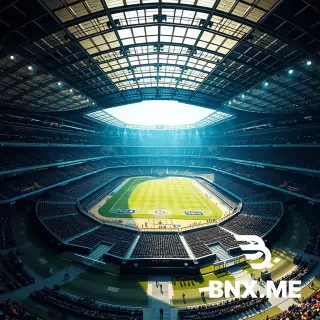
make a stadium inspired by a bee hive hexagon
make a stadium inspired by a bee hive
generate me a stadium with the shape of a hexagon like a bee hive show the view on top with roof everywhere except leave a rectangle view where u can see the field
generate me a stadium with the shape of a hexagon like a bee hive show the view on top
generate me a stadium with the shape of a hexagon like a bee hive
Answers to frequently asked questions about working with the BNX AI 1.0 image generation system.
We are a young, technology-driven, growing startup. At the moment, we are not attracting funding from venture capital funds or business angels, so we would appreciate any support. You can sign up for the Enterprise plan, which will help us. 💙

When generating an image, you can open the options and enable stealth mode, then the images will not be added to the public database and no one will see them; they will be private.
We trained the BNX AI 1.0 algorithm for over a year, and it is equally adept at generating various types of images: illustrations, architecture, portraits, super-realistic images, 3D models, logos, and much more. We managed to achieve very good results when working with text, so it is easy to create both a logo and a poster.
You may use the images at your discretion. Professional and Enterprise plan users may use the images for any commercial purposes. They may also sell these images. We ask Standard plan users to include a link to bnx.me when publishing images, but this is not a mandatory requirement.